
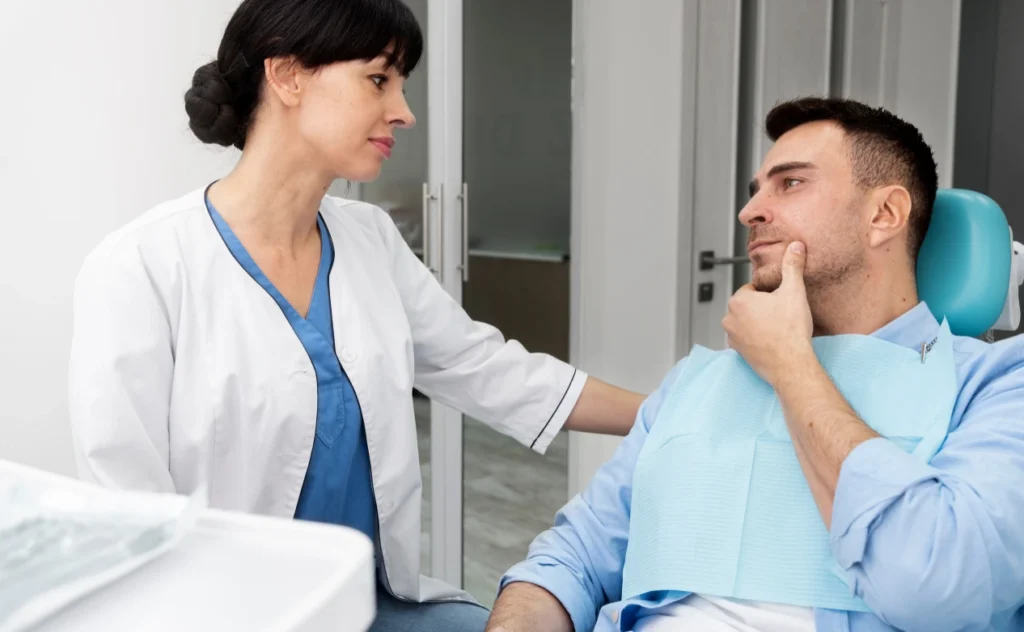
A routine checkup covers more than the teeth. An oral cancer screening can detect early changes in the soft tissues of the mouth, such as lumps, sores and red or white patches, often before any discomfort develops.
The exam is brief and is usually completed during a regular visit, so it adds little time to an appointment. It relies on careful looking and touch rather than special equipment, and anything unusual leads to a plan for monitoring or further evaluation.
How an Oral Cancer Screening Is Carried Out
The standard first step is a visual examination and palpation of the mouth, with the face and neck checked as well. The dentist follows a set order so that no area is skipped.
The lips, cheeks, tongue, floor of the mouth, gums and throat are viewed under good light, and the dentist feels for lumps or tender spots. The exam needs no needles or special preparation.
Which Changes in the Mouth a Screening Can Pick Up
A screening looks for lumps, sores, swelling, tissue irregularities and red or white patches on the lips, tongue, throat and other soft tissues. Many of these changes turn out to be minor and unrelated to cancer.
Early changes often cause no discomfort, so a routine exam can notice them before they are obvious to the patient. Spotting a change early also means it can be tracked over time instead of being discovered late.
Why Screening Fits Into Routine Checkups
Oral cancer screening is often completed as part of regular exams and cleanings, so it does not usually need a separate appointment. Adding it to a visit already on the calendar keeps it simple.
Each visit also builds a record of how the soft tissues look. That history makes it easier to tell a new change from something that has always been there.
Patients Who Benefit From Regular Screening
Adults of any age can include screening in their regular visits. It is often emphasized for people who use tobacco or alcohol, since these are recognized risk factors for oral cancer.
Anyone who notices a sore, lump or patch that lingers can ask for an exam sooner instead of waiting for the next scheduled visit.
How Patient Comfort Is Handled
Most patients find the exam undemanding, because it involves a light, a mirror and the touch of gloved fingers. Patients who feel anxious or have a sensitive gag reflex can mention it beforehand so the dentist can pace the exam.
Questions are welcome at any point, including what a particular finding means and what happens next.
How Follow-Up Works After an Unusual Finding
When something looks unusual, the dentist may suggest re-checking the area at a later visit to see whether it changes. If it persists or looks concerning, a referral for further evaluation follows.
A referral is a precaution and not a diagnosis. The dentist explains what was seen, why it matters and what the next step involves.
Oral Cancer Screenings at Village Green Dental Center
At Village Green Dental Center in Aurora, IL, oral cancer screenings are often completed during routine dental checkups and cleanings, alongside exams and general family dentistry. The goal is to identify concerns early so that timely evaluation can happen when it is needed.
Patients from Aurora, Fox Valley, Naperville and Oswego are welcome to ask for a screening at their next visit, and our team can explain how it fits into their care. Sedation dentistry is available as well.
Oral Cancer Screening in Aurora, IL
A short exam during a regular visit can bring early changes to light, and asking about it takes only a moment. Village Green Dental Center welcomes questions about screening from patients across Aurora, Fox Valley, Naperville and Oswego.
Frequently Asked Questions
Does an oral cancer screening hurt?
The exam relies on looking and a light touch, so most patients feel little more than the pressure of fingers on the cheeks, tongue and neck. Patients who feel tender anywhere can say so during the exam.
Can a mirror check at home replace a screening?
Checking the mouth with a mirror can help notice changes between visits, though it does not replace a professional exam. Research on self-examination shows it misses a good share of abnormal findings that a trained examiner can notice.
Is screening only for people who smoke or drink?
No, screening is suitable for adults generally, and tobacco and alcohol use are simply recognized risk factors. Anyone with a lingering sore, lump or patch can request an exam sooner.
Does a screening include a biopsy?
No, a screening is an examination only. A biopsy is a separate step that is considered if an area looks unusual enough to need further evaluation, and the dentist explains why before suggesting it.